
ELIXIRFAB / MANUFACTURING
Finishing & Heat Treatment
Anodizing, plating, passivation, heat treatment and grinding.
Coordinate machining and treatment around the part's final dimensions, function and appearance. Define masking, thickness or hardness, and the evidence needed at acceptance.
A clear basis for your quotation.
Backed by our family's machining factory in Dadu, Taichung, ElixirFab combines manufacturing capability with complementary Asian partner processes and one technical and delivery coordination contact for overseas customers.
What to send
- Base material and treatment specification
- Final dimensions and protected surfaces
- Appearance samples and report needs
What we confirm
- Treatment partner and operation sequence
- Dimensional allowance and distortion risks
- Final inspection and surface protection
What you receive
- An agreed final-part specification
- Machined and treated parts as scoped
- Specified treatment and inspection records
Scope & technical review
Capacity, achievable tolerances, inspection equipment, quantity and lead time are confirmed against your drawing and the selected factory before quotation.
01Processes & Acceptance Inputs
Specification review
Processes & Acceptance Inputs
Each operation is assessed with an appropriate treatment partner. Availability, specification compliance and documentation are confirmed for the actual material and part; listing a process is not a blanket certification.
| Operation | What to Specify | Final-Part Review |
|---|---|---|
| Anodizing | Applicable standard/type, alloy/temper, thickness, color, sealing and cosmetic zones. | Masking, contact/rack locations, final fits and dimensions. Confirm dimensional effects with the anodizer rather than applying a universal allowance. |
| Nickel, zinc & chrome plating | Coating system, standard, thickness, intended function and appearance; any substrate-specific or post-treatment requirements. | Coverage on threads/bores, masking, mating dimensions, and agreed evidence for the specified treatment. |
| Passivation & black oxide | Substrate grade, governing process specification, appearance and protection/packaging requirements. | Do not treat either process as a substitute for material selection, a dimensional coating specification or a complete corrosion qualification. |
| Heat treatment | Required cycle/specification, final hardness and test method; case depth or material condition when applicable. | Machining sequence, distortion, final grinding allowance, test locations and treatment-lot records. |
| Grinding & centerless grinding | Surfaces to finish, final size, form/runout requirements and surface roughness. | Access, stock allowance, material hardness, datum control and measurement after the final operation. |
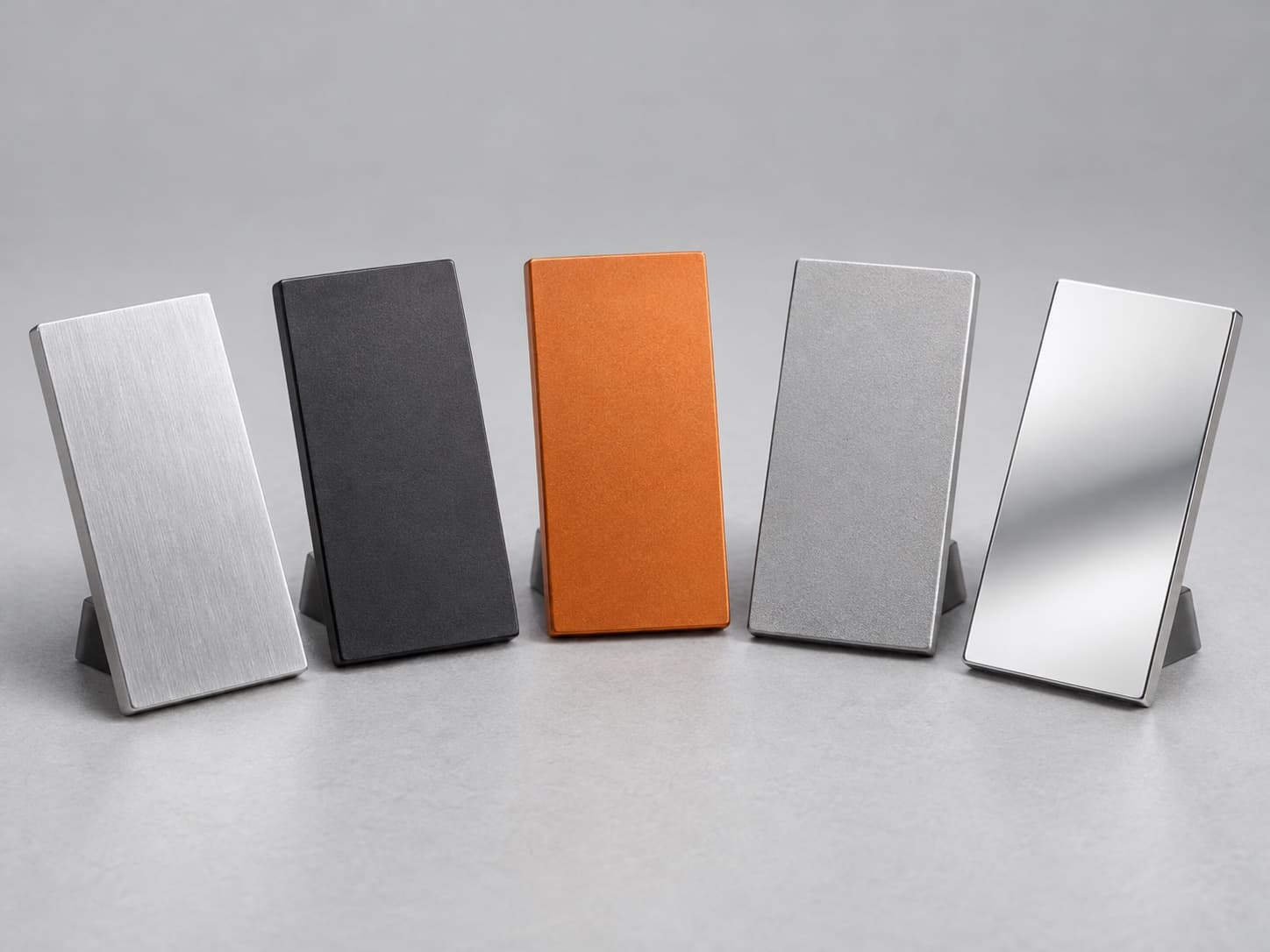
| Deburring, tumbling & polishing | Edge limits, internal burrs, texture/appearance sample and areas that must retain sharpness or size. | Potential edge rounding, marking readability, residual media and cleaning; mirror appearance does not alone specify roughness. |
02Agree the Process Sequence
Key considerations
Agree the Process Sequence
Before, After or Masked?
For every critical fit, state when the dimension applies and whether the surface is treated or masked. Coordinate the machinist and treatment partner on allowances. Final drawings and acceptance must agree; unapproved shop adjustments are not design changes.
Cosmetics & Functional Surfaces
Distinguish cosmetic surfaces from sealing, sliding, electrical-contact and locating surfaces. Approve color/texture references, allowable rack marks and inspection conditions where appearance matters. If a salt-spray, thickness or adhesion test is required, define it explicitly and confirm the partner's ability to provide the report.
Release & Protection
Agree on final dimensional inspection, treatment records, lot identification, corrosion protection and packaging. Separate parts when cosmetic or functional surfaces could touch in transit, and agree any cleaning or protective-agent restrictions before shipment.
Technical references & applicability
Manufacturer and industry references explain general technical principles. They do not establish ElixirFab or partner equipment ownership, certification or brand affiliation. Project capability is confirmed against the selected factory and drawing.
Related Knowledge & Cases
Manufacturing FAQSourcing a Precision-Ground U-Shaped Fixture Component: Managing a 4 µm Requirement
Define functional faces, flatness, parallelism, inspection conditions, heat treatment and protective packaging before sourcing a U-shaped fixture component.
17-4 PH Valve Stems: Corrosion, Seawater and Heat Treatment
How we review 17-4 PH valve stems: corrosion exposure, seawater risks, H900/H1025/H1150 conditions, machining sequence and functional-surface acceptance.
Alloy C22 Valve Stems: Corrosion Resistance and Seawater Conditions
How Alloy C22 / UNS N06022 addresses chemical and seawater corrosion, and what to confirm when machining valve stems, bores and functional surfaces.
NEXT STEP / Finishing & Heat Treatment
Which surfaces must fit, seal or look right?
Share your drawing revision, material, quantity, critical features and delivery destination. If something is undecided, we can start with the application.
Need an NDA? Let us know before sharing files. Send attachments by email.